


.webp)
Advocates for Personalized
Mental Health Care
When an individual is struggling with a mental health or behavioral health condition, it can be overwhelming for everyone involved. This is especially true when trying to determine how best to help them.
Our team of highly trained professionals is here to offer guidance, support, and care coordination, to help individuals and families receive the proper treatment and mental health care. Whether concerned about a family member, or seeking treatment for yourself, it’s never too late to get professional help.
The Value of Feinberg Care for Mental Health
Types of Mental Health Disorders
A mental health disorder consists of a wide range of conditions that affect someone’s mood, thinking, and behavior. At Feinberg Consulting, we offer an array of services to support the various mental health conditions that can develop. Listed below are a few of the conditions this includes.

Identifying the Root Cause
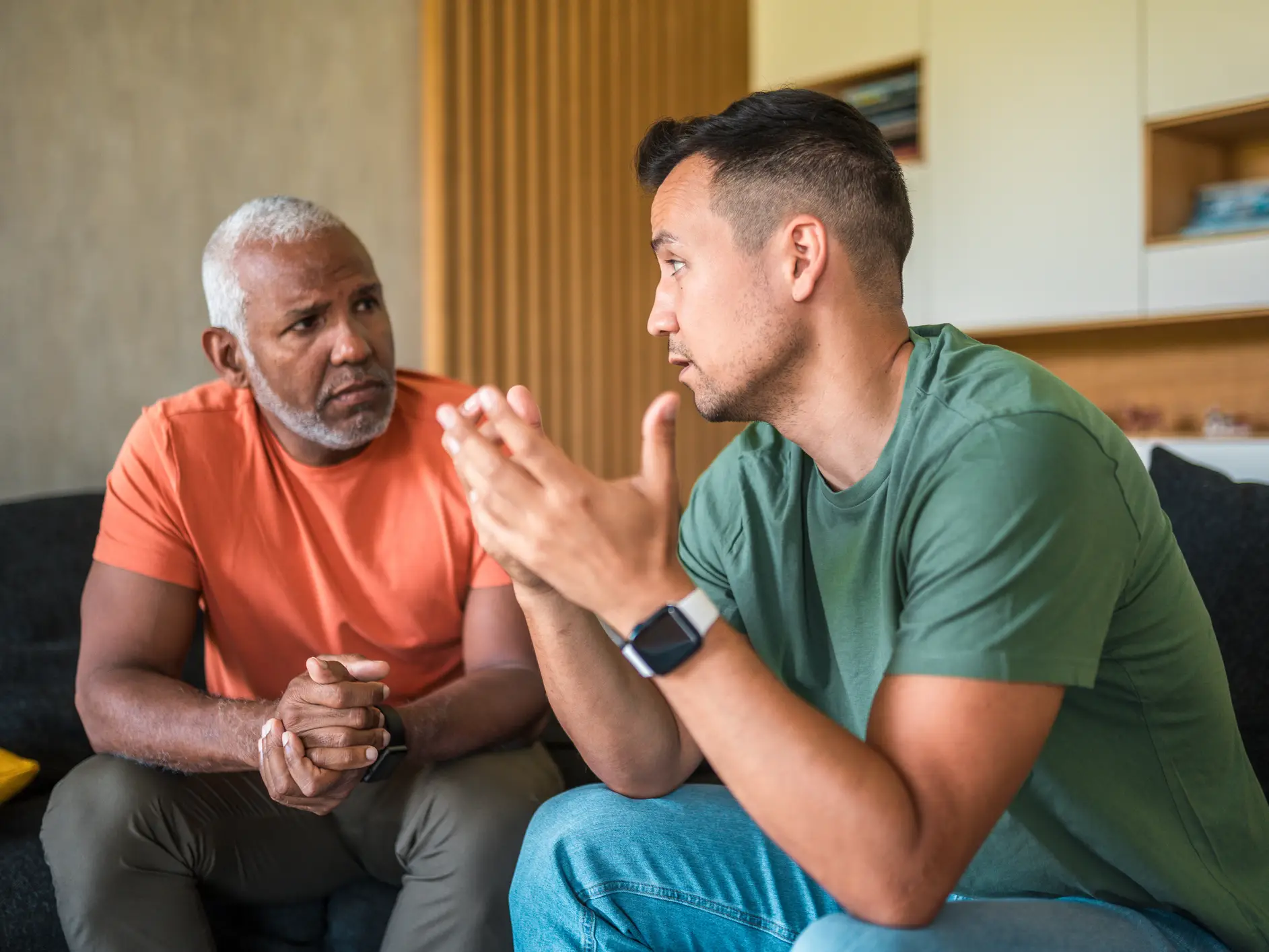
Mental health disorders develop as a result of other underlying genetic, traumatic, and/or medical issues. When an individual is diagnosed, it’s important to take a close look at all aspects of their life and past experiences to help identify the root cause of their mental health disorder and uncover any other co-occurring disorders.
A co-occurring disorder also called comorbidity, or dual diagnosis is a medical issue that occurs either simultaneously, or successively after another conditions. These conditions may be mental, physical, or a combination of the two. In many cases, individuals with a substance use disorder may also be diagnosed with one or more mental health disorders or medical concerns. For example, if someone struggles with an undiagnosed anxiety disorder, they may begin drinking or self-medicating to help alleviate their anxiety symptoms. Over time, increased use or abuse can develop into a substance use disorder.
Because of the high nature of co-occurring disorders, our multidisciplinary team is highly experienced and trained to recommend and develop treatment plans that address an individual’s complex needs.
How We Can Help
Assessment & Planning
A Holistic Approach
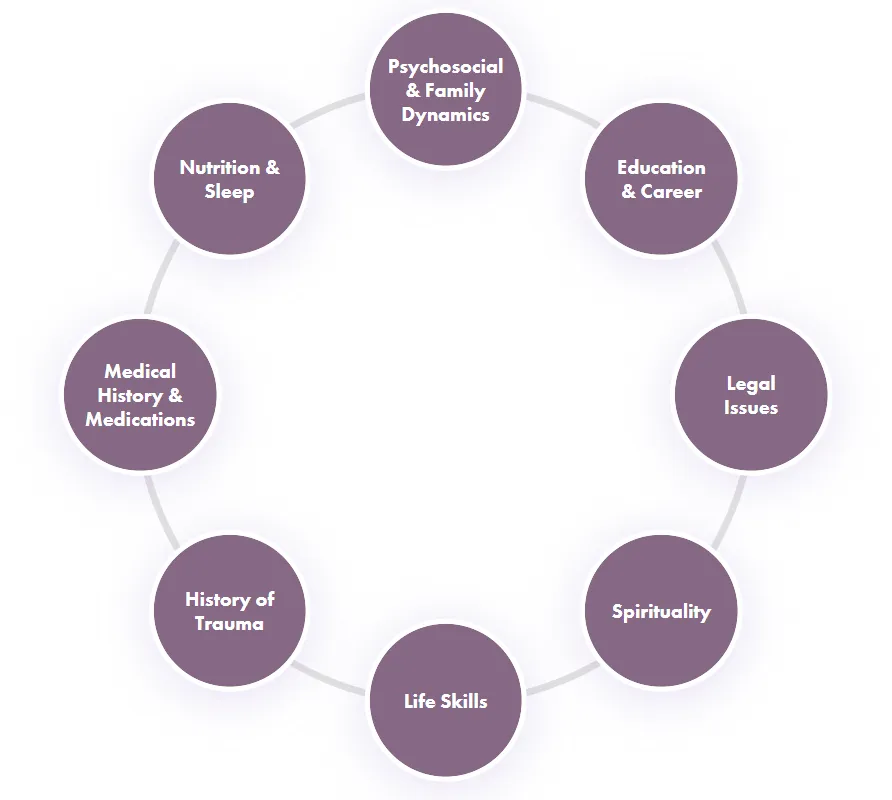
Mental health disorders develop for a number of reasons and they vary for every individual. They can also develop as a result of other underlying genetic, traumatic, mental health concerns, and/or medical issues. In order to best gain a holistic understanding of a person’s past history and current needs, we meet with them and their family to get toknow them better, learn about their past, and discover the ways our services can best support their care needs.
Our Clinical and Case Managers first meet with the individual and/or their family to review the following areas outlined in the graphic. Providers such as physicians, therapists, and other medical and mental health providers are also contacted to obtain additional information on the client if needed.
Once the assessment is complete, our Clinical Team meets to develop a customized care plan with treatment and care recommendations that are presented to the individual and their family. Recommendations may include a formal intervention if the individual of concern is resistant to treatment.
Our goal is to make the assessment process as comfortable as possible. We understand it can be difficult to discuss certain topics and experiences, but we are here to ensure individuals and families that the information gathered during the assessment is important because it allows our team to better understand the individual better so we can help them receive the best treatment available to their needs. Family members are encouraged to be involved in the assessment as they play an important role in their loved one’s recovery process.
Mental Health Intervention
Interventions are a Process, Not an Event
An intervention is intended to help individuals and families who have suffered mentally, emotionally, physically, and financially as a result of a mental health disorder, substance use disorder, or other process addictions. We like to think of an intervention as an interruption to a path that is currently causing harm to an individual, and often times the ones they care about the most. When this interruption is created in a safe and loving space, an alternative path to hope and healing is created. Whether a formal intervention is needed, or a different form of intervention is determined to be more beneficial, our trained interventionists and addiction professionals are here to guide families through this process.
Our team of interventionists approaches all interventions with dignity and compassion. An intervention is not about creating shame, blame, or guilt. Through effective communication, not confrontation, our goal is to create a healing environment that inspires families and their loved ones to accept help. During the intervention we let the family communicate what they’ve experienced, what their fears are, and what their hope is for their loved one. Our interventions are designed to not only support the loved one of concern but to also provide their family with meaningful guidance and tools.
When situations escalate quickly, families may need immediate guidance to stabilize what’s happening and determine appropriate next steps. While Feinberg Consulting does not provide emergency or crisis intervention services, we can respond promptly to help assess acute concerns, reduce confusion, and guide families toward appropriate levels of care.
In urgent situations involving immediate danger to oneself or others, emergency services should always be contacted by calling 911 or local emergency resources. Our role is to support families in navigating high-stress, time-sensitive moments once safety is established—helping determine treatment options, coordinate care, and move forward with clarity and support.
.webp)
Formal Intervention
Our formal interventions are family-focused and approached in a loving, dignified, and non-shaming way. When experiencing the stress and turmoil of worrying about a loved one, it can be easy to give into anger and blame. That is why we are here to coach families on the following key elements throughout the intervention planning process:
We meet with key family members to assess the situation and find out everything we can about what they are experiencing and what their loved one of concern is doing.
We prepare the intervention team, which can consist of family members, friends, relatives, neighbors, or other influential people in the person’s life. We carefully select relationships that will have a positive impact on the process.
The intervention team meets before the intervention to receive coaching, and education for everyone involved. These meetings also help us plan and prepare for any outcomes that may arise. We also address everyone’s concerns and make sure they share the same vision for their loved one moving forward. Presenting as a unified team with a consistent message can be very impactful.
Our professional team develops treatment recommendations that we determine to be best suited for the individual. We have carefully vetted different programs across the country that we trust.
We work with everyone involved to develop intervention letters that outline their love, support, fears, experiences, and commitment to supporting them throughout their recovery process without enabling their behavior.
We also work with them to establish bottom lines that set firm boundaries on what will and will not be tolerated if their loved one doesn’t accept help.
We work as a team to determine what objections the individual will have regarding accepting help or going to treatment. Discussing these before the intervention allows us to strategize and provide answers to their objections during the intervention. We also work with them to establish bottom lines that set firm boundaries on what will and will not be tolerated if their loved one doesn’t accept help.
It’s important to remember that interventions exist on a continuum. There are different types of formal interventions that vary for each family’s needs. One type of formal intervention is very intentional and planned, often resulting in us having the intervention meeting unannounced. There is also an invitational intervention where we invite the loved one of concern into the process and schedule a time to have the actual intervention meeting. There are other scenarios that exist on a continuum, where our team strategizes with the family on the best way to present our plan so that it is accepted by their loved one.
.webp)
Treatment Placement
Treatment Recommendations and Coordination of Care
Based on the assessment and the information we learn about an individual, our Clinical Team develops and presents treatment recommendations that reflect the appropriate level of care needed. Treatment recommendations vary based on the individual but may include residential treatment placement, outpatient treatment, therapy, recovery coaching, family coaching, and more. Proper placement and treatment recommendations are the foundation for lasting recovery.
When residential treatment is recommended, our clinical team will present options for treatment centers based on our knowledge of the programs and the clinical and ethical vetting process we provide. We work with the individual and their family in supporting them to choose a treatment center that will provide the highest quality of care and peace of mind. We also develop a plan for continuing care upon discharge from residential treatment.
We are advocates for our clients and do not have any financial connection or receive any financial benefit from the programs and facilities we recommend. We strictly recommend facilities that have been personally vetted by our team and meet the needs of the client.
We provide a sober transport to drive or fly with clients to their intended destination. From traveling to and/or from a treatment facility to providing local transportation, we make sure clients get where they need to go safely.
Our Recovery Companions support individuals by providing 24/7 support and accountability to their recovery plan. They are currently in recovery themselves and provide compassionate and judgment-free companionship to clients.
Clinical & Case Management
Your Clinical Team
Each individual has their own Clinical Team which includes a Clinical Manager and a Case Manager. Clinical and Case Managers play a crucial role throughout the entire recovery process and are an essential element of our multidisciplinary team approach. Our Clinical and Case Managers are experienced and compassionate addiction and mental health professionals who provide advocacy, oversight, coordination, and collaboration to everyone involved in the individual’s care.
In addition, they are also able to intervene and provide guidance when the agreed-upon care plan is not being properly followed. They have the awareness and skill to interrupt this early and work with the individual’s care team and family to put contingency plans in place.

Family Programming
The Importance of Family Healing
When it comes to substance use disorders and addiction, it affects everyone in the family system. Through our family-centered approach, we work with families to guide, educate, and support them through their own healing as well as their loved ones’ recovery journey. We also provide the following services to support this process.
Family Coaching provides ongoing education and support to families related to substance use disorder, addiction, and/or mental health concerns. Our compassionate Family Coaches build trusting relationships with families to assist in helping them through the treatment and recovery process.
Through coaching sessions, we work with families to help them identify the patterns or actions that are currently not working and explore ways they can achieve the results they are looking for. Our Family Coaches also provide practical strategies on codependency, boundary setting, and effective communication. We also work with families on improving their self-care so they are better able to support their loved one(s).
Coaching for the family takes place in-person, via phone, or video conference and is tailored to meet the family’s needs.
Experiential Breakthrough Intensives are designed for families or individuals who have been impacted by substance use, addiction, trauma, and/or mental health challenges. These intensives take a deeper look at patterns of behavior, thought, emotion, and coping that—while often developed for survival—may no longer be serving the individual or family system. By examining these patterns together, we help participants understand how stress, shame, and disconnection can take hold and shape ongoing dynamics.
Each intensive is thoughtfully designed and facilitated by trained, credentialed clinicians to meet the unique needs of the family or individual involved. Participants receive education around emotional regulation, communication, boundaries, and relational dynamics, while also engaging in experiential practices such as psychodrama, guided movement, breathwork, and mindfulness to support insight and integration.
The outcomes of these intensives are often profound. By identifying what is driving emotional reactions beneath the surface, participants gain greater self-awareness, relief, and practical tools to support emotional resilience, healthier relationships, and sustained well-being for everyone involved.
Coaching Services
We provide a variety of coaching services designed to support individuals and families throughout the treatment process, recovery process, and beyond. Learn more about the different coaching services we offer below.
Our Recovery Coaches are compassionate and insightful individuals who have been in recovery themselves for a minimum of five years. Their number one priority is to build a trusting and meaningful relationship with the individual they are coaching. Through weekly communication, they help individuals develop goals that are supportive of their recovery. These goals could include participation in a recovery program, development of a support network, budgeting, job or career-related objectives, or going back to school. When reviewing goals, the Recovery Coach supports the individual in identifying what was accomplished, what could be improved, and what obstacles are currently present. Recovery Coaches also provide compassionate support during challenging times, which undoubtedly comes up in recovery.
Our Life Coaches work with individuals to help them create positive results in their lives. At times it is through exploration and the creation of goals, at times it is about being in discovery as to what is possible. Our Life Coaches also support individuals through challenging life circumstances, transitions, and other life events. They coach clients on navigating these situations by providing guidance and helping them establish and achieve goals.
Our Health Coaches work with individuals to help them cultivate and maintain a healthier lifestyle by creating long-lasting change in the areas of nutrition, exercise, health care, and emotional or mental wellness. They start by evaluating the person’s lifestyle, assessing any health concerns, and establishing goals that will help them create change in their overall health and wellbeing. Their goal is to support individuals in recognizing their own values, internal strengths, and insights to achieve their personal goals. They also receive self-management strategies and holistic practices to assist them with sustainable long-term changes.
Our Certified Rehabilitation Counselor works with individuals to assess their interests, aptitude, motivation, and skills. They also support in identifying a career path that will be both purposeful, fulfilling, and supportive of the individual’s recovery and personal goals.
Our Executive Coaches provide support and guidance to executives and corporate professionals. They coach them on the areas of developing and improving leadership, assisting in creating agreements and organizational expectations, as well as providing direction and guidance in the area of company culture and values.
5 Star Google Rating

.avif)

.png)

Where do I begin? The knowledge, the compassion, the kindness, the support, the professionalism. All of it contributed to one of the most wonderful experiences my family has ever had. And as a result of their greatness, my sister is finally getting the help that she needs. I know that we wouldn't have been able to do it without the leadership and guidance of Feinberg Consulting. Steve and Pam are exceptional at what they do
.png)
I am a probate/estate planning attorney. I reached out to Feinberg to assist one of my clients in procuring a residential placement for hospice in the Metro-Detroit area. I spoke with Becky Eizen, who assisted my client with a relocation from Western Michigan to Metro-Detroit, so that she could be closer to her son and her grand-children. Becky and her staff rapidly responded to my client's need, giving her and her family the peace of mind that they needed. Becky was able to harness several different resources to accomplish this effort in a prompt and professional manner. Feinberg and its staff handled my client's case with the utmost care and consideration. I would highly recommend Feinberg Consulting for elder care assistance, as I believe that they are at the forefront of providing this service in the Metro-Detroit area,
.webp)
If you are a family looking for help because your loved one has a substance use or mental health disorder and don't know where to turn for help then Feinberg Consulting is an excellent place to start. Having worked several cases with them, I can tell you that they are a wealth of knowledge, they care about helping people and have worked in this industry for many years. It is my pleasure to recommend Feinberg consulting and their excellent team of professionals.
.png)
I have had the pleasure of referring to Feinberg Consulting for several years. Based in Michigan and South Florida, they serve their clients and their families nationally. With assessment, intervention, case management, coaching, and family support they provide complete wraparound services for those afflicted by mental illness, addiction, and injury. As an organization they are professional, respectful, passionate, ethical and trustworthy. While dealing with issues that are not so pleasant, they remain a joy to work with. I would trust them with my own family members.

Hands down, the Feinberg Consulting team is one of the BEST we have ever worked with. I love the fact I only have to make one call and my needs are met successfully. The added bonus is that when I call, they LISTEN to my needs and concerns and provide solution. Their team is highly qualified, compassionate, professional, and dependable. they always show up with the "right intention". They show up with the "right intentions". They are filled with integrity and their communication with us is beyond wonderful. Thanks Pam, Steve and team... you make our lives MUCH easier and we appreciate you.
.webp)
The team at Feinberg Consulting are some of the most caring people I've ever met. They really take time to get to know and understand you and your family's needs. They are a team of exceptionally qualified and compassionate caregivers.
.webp)
If I could give more than 5 stars for a rating, I would. I can't say enough great things about the service provided by Feinberg Consulting. Our case worker, Sandi, and sober coach, Thatcher, were a key integral part of my son's recovery. My son's treatment took place out of state and Sandi served as almost like a second mother to him. She was kind, compassionate, resourceful, responsive and always there to make sure my son got the care and services he needed. She was also very non judgemental and understanding of the struggles my son's mental illness presented. Her incredible service gave me complete peace of mind. Thatcher was also very kind, compassionate, warm and helpful. He was there as a support and companion when my son needed him most. He was open and created a trusting relationship so that my son felt free to be open about his struggles and needs. The staff at Feinberg was also very friendly, helpful and on top of things. My son is doing fantastic now and I know he would not have gotten here without the support of these wonderful people.
.webp)
Feinberg Consulting provides families with an exceptionally responsive team of professionals to provide resources and care to individuals who need support and guidance. Their team is skilled in getting to know the identified patient, prioritizing his/her needs, and putting an appropriate and individualized plan in place. I have had direct experience with families that the Feinberg team has helped; I would trust them with my own family.

Feinberg Consulting has succeeded where three decades of medical and mental health interventions have failed. So much in my life has changed for the better. For the first time I am actually happy. It started with an occupational therapist, who provided financial budgeting education and implementation accordingly. A nurse practitioner helped arrange much needed medical appointments, and even attended the appointments with me. The most significant referral was to a Recovery Coach who continues to be one of the most positively influential people I have had in my life to date. The other key component to my care team is a Case Manager, who has lead the plight to get me well, advocating for my best interest every step of the way. Thanks to Feinberg I am now 3 years sober. Thanks to Feinberg I am now back in good graces with everyone I lost during my struggles, most importantly my son. Evidence of my comeback from near death is noted by feedback I get from others on how they’ve seen positive changes in me, namely my family who saw and dealt with me at my worst- they tell me I am the most stable, content and happiest I have ever been. I also now find myself gainfully employed going on three years, with plans to transition back into my true passion, special needs paraprofessional. To say I’m grateful is an understatement. I cannot thank the Feinberg team enough for all they have done to get me back the life I was too far gone to even know I was missing. Much love!!

Feinberg Consulting is an exceptional resource for families navigating complex behavioral health and substance use challenges. We’ve had several families benefit from their clinical expertise in case management, treatment placement, and intervention services. Their team brings professionalism, compassion, and clarity to what can often be an overwhelming process. Feinberg plays a vital role in paving the way toward long-term recovery, and we confidently refer families and clients to their care.







.png)

